Flower Pinch Pots
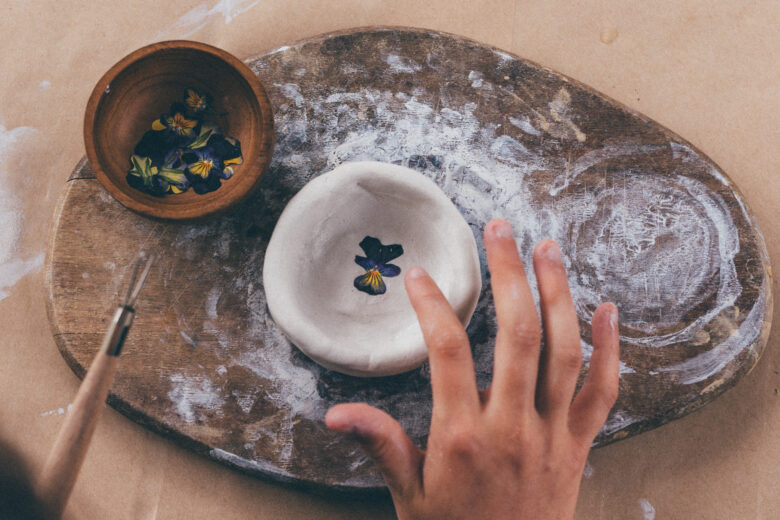
Supporting kids’ creativity doesn’t have to involve detailed plans, complicated setups or expensive materials. Simple art activities can be just as beneficial. They allow kids to connect with their imagination, you, and the world around them. And our air-dry clay pinch pots are the perfect example. They’re fun. Accessible. And, of course, have a nature play twist.
Their beauty lies in their simplicity. You only need a handful of budget-friendly materials, a space to create and a willingness to experiment together.
Working with clay encourages creativity and imagination, develops fine motor skills and hand-eye coordination, promotes problem-solving and offers sensory stimulation. Adding a natural element, like pressed flowers, adds depth to the activity, connecting kids with nature, its beauty and the opportunities it presents to bond through art.
WHAT YOU’LL NEED
- Air-dry clay
- Water
- Pressed flowers (pressed in advance using a flower press or the traditional book method)
- Modge Podge (or alternative water-based sealer)
- Paintbrush
- Clay sculpting tools (optional)
STEPS
- Set up your workspace with newspaper or a wipeable tablecloth.
- Give each child a piece of air-dry clay roughly the size of their fist.
- Roll the clay into a ball.
- Using their thumbs, have the kids press into the centre of the clay ball, creating a bowl-like shape.
- Gently work towards the bottom and edges to make a hollow space.
- Encourage your kids to pinch the clay between their fingers to shape and thin the edges.
- Have them dip their fingertips in water as they go to help smooth the surface and avoid cracks.
- Once they’ve made the desired pot/bowl shape, have them gently place their pressed flowers on the inside of the bowl (bottom and sides) using fingertips or clay tools. Be careful not to press too hard.
- Allow to air-dry for 24-48 hours.
- Apply a clear sealant like Modge Podge to protect the finished pot.
Kids can approach this activity in many different ways. They can use clay tools, sticks or their fingers to add designs, textures or patterns. Or, once dry, they can paint their creations using acrylic paint.
Remember, before picking any plants for use by children it’s important to research those you intend to use to determine safety, sensitivity and toxicity. Edible flowers and herbs are great options.