Activating The Paddock: Outdoor Learning at The Willows Children’s Centre
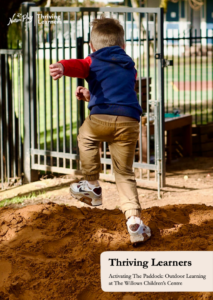 Nature Play SA’s partnership with The Willows Children’s Centre marked the pilot of the Thriving Learners program, providing a valuable opportunity to trial key elements, including co-design, impact documentation, and the Areas of Impact as measures of success.
When The Willows acquired a piece of land from the neighbouring primary school, affectionately named The Paddock, it sparked big ideas. Initially envisioned as a structured play space, The Paddock held untapped potential for something more: a dynamic outdoor learning environment. As staff explored possibilities, they recognised a need for guidance and inspiration. How could they honour children’s voices, embrace flexible learning, and bring families along on the journey? This is how The Willows transformed The Paddock into a space where curiosity, creativity, and connection to nature thrive.
Activating The Paddock: Outdoor Learning at The Willows Children’s CentrePlanning your own nature-based project
A helpful collection of resources and inspiration to support your nature play and outdoor learning project.
Why Sheets: The Benefits of Nature Play
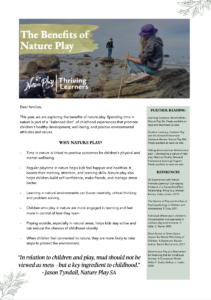 These Why Sheets, inspired by the work of Alfie Kohn, are research-supported documents designed for educators to share with families about the importance and benefits of nature play. We understand how busy educators are, so these information sheets have been created to help them easily communicate the value of nature play and outdoor learning.
The Why Sheets can be downloaded to support:
Sensory Play in the Family Daycare Setting
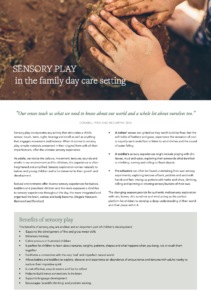 Sensory play incorporates any activity that stimulates a child’s senses; touch, taste, sight, hearing and smell, as well as anything that involves movement and balance. When it comes to sensory play, simple materials presented in their original form with all their imperfections, offer the best sensory experience.
Sensory Play Resources
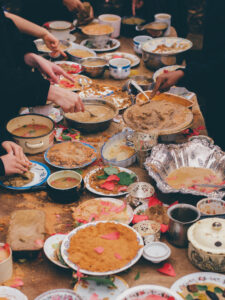 Sensory play is important for children’s health, development and wellbeing. Mud play allows children to explore and create freely, building critical thinking, fine motor skills, and sensory awareness, while fostering creativity and problem-solving.
Natural Playspaces: Principles
 Natural and wild spaces offer the best opportunities for children to play freely outdoors. We can’t always provide this experience but we can create spaces that offer rich and diverse experiences that enable children to play how they want to play, that will test their cognitive and physical capabilities, stimulate their senses, provide social interactions or independent play, and will teach them about living things and how to care for them.
The following principles have been developed by Nature Play SA to assist you create an environment that will help all children who use this space to enjoy freedom, fantasy, privacy and peace.
Natural Playspace Principles
Nature Playspaces: Getting Started
 You’ve made the important decision to redevelop your outdoor space into a natural playspace. But how do you go about it and what do you need to consider?
NPSA believe that with the exception of wild, natural environments, carefully planned constructed natural playspaces provide the best opportunities for play that is unstructured and rich in learning opportunities.
Natural Playspaces Getting StartedDocumenting Growth and Connection
Tools to help make nature play and outdoor learning visible.
Practitioner Guide to Assessing Connection to Nature
How can you assess connection to nature? Researchers and evaluators have developed numerous tools to measure connections to nature, including surveys, observational strategies, and interview guides.
Practitioner Guide to Assessing Connection to NatureAreas of Impact: Observational Story
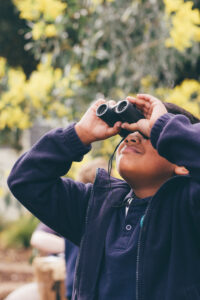 The Areas of Impact: Observational Story (Ob Story) aims to record how the Department for Education’s Areas of Impact (AOI) may be engaged in nature play settings. The AOI are four domains that support children to learn in holistic and supportive environments:
- Wellbeing
- Effective Learners
- Learner Agency
- Equity and Excellence
The Ob Story has been developed for use by Nature Play SA in their work with site schools and kindergartens. It is also designed for possible future use by teachers and educators, and teaching teams at kindergartens and primary schools. The tool invites education professionals to record an observation of nature play. The Ob Story asks for curriculum links, detailed observation, social play types, considers the child’s perspective, and encourages reflective practice from the observer. There are two versions of the Ob Story that align with the Australian frameworks and curriculums used in South Australian public education: The Australian Curriculum V.9, and the Early Years Learning Framework (EYLF) V2.0.
Areas of Impact: Observational Story for the Australian Curriculum Version 9
Areas of Impact: Observational Story for Early Years Learning Framework Version 2.0
Social play type:
Noting the type of play may reveal how certain types of social play within nature influence the AOI. Tick play types identified in the play observation.
- Solitary play: a child plays on their own, without interacting with others.
- Onlooker play: a child observes other children playing.
- Parallel play: children play side-by-side, without interacting with each other.
- Associative play: children play side-by-side, with interactions such as sharing resources and speaking to each other.
- Cooperative play: children engage in play together that has an agreed upon, or shared outcome.
Resources and Ideas to Support Your Journey
Resources to inspire and support your nature play and outdoor learning journey.
Learning Outdoors: Benefits and Risks
 The nature-based outdoor learning environment offers a unique opportunity for educators to encourage the stretching process in children and help them realise their full potential. When outdoor learning environments are places that allow inspiration and creativity to take root, for curiosity and spontaneity to be realised and importantly, for risk and failures to be viewed as positive learning experiences, children will be the beneficiaries. This learning can help them develop the life skills and awareness they need to be confident, resilient and able-bodied adults who take responsibility for themselves and their actions.
Outdoor Learning Framework
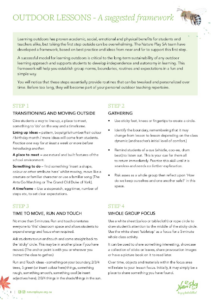 This framework will help you establish routines, boundaries and expectations in a fun and simple way.
The Environment as the ‘Third Teacher’
How can the spaces we create shape the way children learn, explore, and connect with the world? Inspired by the Reggio Emilia approach, this ACECQA resource explores the vital role of the environment in early childhood education and care. It highlights how thoughtfully designed indoor and outdoor spaces foster curiosity, agency, and deep engagement. From natural materials to flexible learning settings, discover how your environment can become an active teacher—enriching children’s experiences and supporting their wellbeing.


