Connecting Outdoor Learning and Wellbeing with Seacliff Primary School
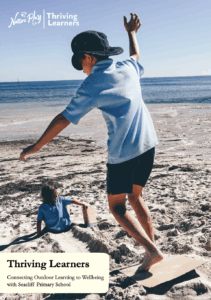 For this Thriving Learners project, Seacliff Primary School partnered with Nature Play SA to explore the connection between outdoor learning and student wellbeing. Weekly visits to a local reserve provided opportunities for students to develop self-regulation, wellbeing literacy, and confidence through nature journaling and play.
Read about how this partnership created a calm, responsive learning environment where students could express themselves in diverse ways, connect with place, and engage in slow, purposeful learning that nurtured curiosity and agency.
Connecting Outdoor Learning and Wellbeing with Seacliff Primary School
Planning your own nature-based project
A helpful collection of resources and research to support your nature play and outdoor learning project.
How to Teach Nature Journaling
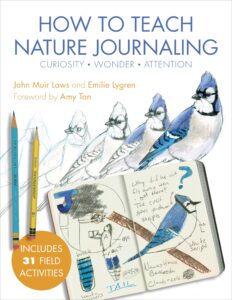 A beautiful (and free!) resource from John Muir Laws and Emilie Lygren and the Wild Wonder Foundation.
How to Teach Nature Journaling features 31 hands-on field activities to connect art, science, math, and critical thinking, while encouraging students and mentors alike to recognise and record the wonder and beauty in the natural world. Coupled with videos and resources from The Beetles Project, it’s a great way to introduce learners to nature journaling through observations and curiosity.
Check out the instruction video “I notice, I wonder, It Reminds Me Of” to see student activitity in action.
Why Sheets: The Benefits of Nature Play
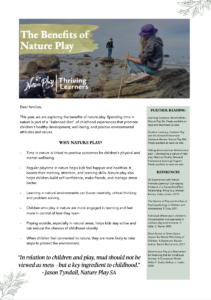 These Why Sheets, inspired by the work of Alfie Kohn, are research-supported documents designed for educators to share with families about the importance and benefits of nature play. We understand how busy educators are, so these information sheets have been created to help them easily communicate the value of nature play and outdoor learning.
The Why Sheets can be downloaded to support:
Outdoor Learning Framework
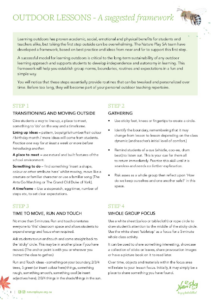 This framework will help you establish routines, boundaries and expectations in a fun and simple way.
Learning Outdoors: Benefits and Risks
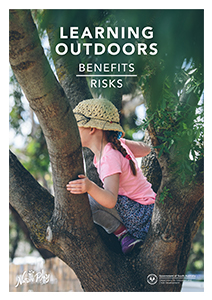 The nature-based outdoor learning environment offers a unique opportunity for educators to encourage the stretching process in children and help them realise their full potential. When outdoor learning environments are places that allow inspiration and creativity to take root, for curiosity and spontaneity to be realised and importantly, for risk and failures to be viewed as positive learning experiences, children will be the beneficiaries. This learning can help them develop the life skills and awareness they need to be confident, resilient and able-bodied adults who take responsibility for themselves and their actions.
'Detective' ID Sheets
 Green Adelaide offer a range of resources for teachers, information on gardens, samphires, native grass and more.
- Common Urban Birds ID chart
- Beachcombing ID Chart
- Native Plants of the Adelaide Plains
- All Green Adelaide Teacher Resources
Stories and Ideas to Support Your Journey
Articles and examples of practice from around South Australia to inspire and support your nature play and outdoor learning journey.
Sparking Student Curiosity Through Nature Journaling
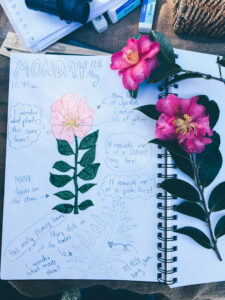 Sparking Student Curiosity Through Nature Journaling: Students can explore science concepts through an activity that encourages them to record their observations in thoughtful ways. This Edutopia story unpacks how nature journaling can become part of your routines and rituals.
Why Kids Should Nature Journal at All Grade Levels: A 2023 review makes a strong case that hands-on observation of natural phenomena has both academic and psychological benefits.
Tjilbruke Dreaming Story

Photo: Simon Cameron
The Tjilbruke monument at Kingston Park Coastal Reserve – Tulukatangga commemorates the Tjilbruke Dreaming story. Designed and created by sculptor John Dowie, it represents Tjilbruke carrying his dead nephew, Kulultuwi, on his journey south.
The Tjilbruke Journey story (PDF)
Learn more about Aboriginal culture and heritage in the City of Holdfast Bay.
Documenting Growth and Connection
Tools to help make nature play and outdoor learning visible.
Practitioner Guide to Assessing Connection to Nature
How can you assess connection to nature? Researchers and evaluators have developed numerous tools to measure connections to nature, including surveys, observational strategies, and interview guides.
Practitioner Guide to Assessing Connection to NatureAreas of Impact: Observational Story
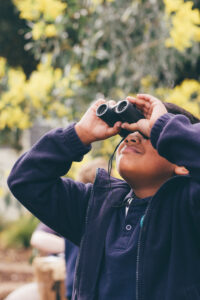 The Areas of Impact: Observational Story (Ob Story) aims to record how the Department for Education’s Areas of Impact (AOI) may be engaged in nature play settings. The AOI are four domains that support children to learn in holistic and supportive environments:
- Wellbeing
- Effective Learners
- Learner Agency
- Equity and Excellence
The Ob Story has been developed for use by Nature Play SA in their work with site schools and kindergartens. It is also designed for possible future use by teachers and educators, and teaching teams at kindergartens and primary schools. The tool invites education professionals to record an observation of nature play. The Ob Story asks for curriculum links, detailed observation, social play types, considers the child’s perspective, and encourages reflective practice from the observer. There are two versions of the Ob Story that align with the Australian frameworks and curriculums used in South Australian public education: The Australian Curriculum V.9, and the Early Years Learning Framework (EYLF) V2.0.
Areas of Impact: SA Curriculum HPE Prototype (year 5/6)
Areas of Impact: Observational Story for the Australian Curriculum Version 9
Areas of Impact: Observational Story for Early Years Learning Framework Version 2.0
Social play type:
Noting the type of play may reveal how certain types of social play within nature influence the AOI. Tick play types identified in the play observation.
- Solitary play: a child plays on their own, without interacting with others.
- Onlooker play: a child observes other children playing.
- Parallel play: children play side-by-side, without interacting with each other.
- Associative play: children play side-by-side, with interactions such as sharing resources and speaking to each other.
- Cooperative play: children engage in play together that has an agreed upon, or shared outcome.


